Knowledge for the test
Germany's 16 federal states and their capitals
7 min readDiesen Ratgeber auf Deutsch lesen
At a glance
- Germany has 16 federal states (Bundesländer), each with its own capital, parliament and government.
- The city states are Berlin, Hamburg and Bremen. Bavaria, Saxony and Thuringia call themselves Free States (Freistaat).
- The five “new” states since 1990: Brandenburg, Mecklenburg-Western Pomerania, Saxony, Saxony-Anhalt and Thuringia.
- Classic traps: Hesse → Wiesbaden (not Frankfurt), North Rhine-Westphalia → Düsseldorf (not Cologne), Mecklenburg-Western Pomerania → Schwerin (not Rostock), Saxony → Dresden (not Leipzig).
- Your test includes 3 of the 10 state questions – always for the state you live in.
Germany is made up of 16 federal states (Bundesländer, often just called Länder). Each one has its own capital, its own parliament and its own government. Three of them – Berlin, Hamburg and Bremen – are city states, where the city and the state are one and the same. The table below lists all 16 with their capital, parliament and head of government, followed by the classic traps in the citizenship test and some memory aids for the capitals.
All 16 German states and their capitals
| Federal state | State capital | State parliament | Head of government |
|---|---|---|---|
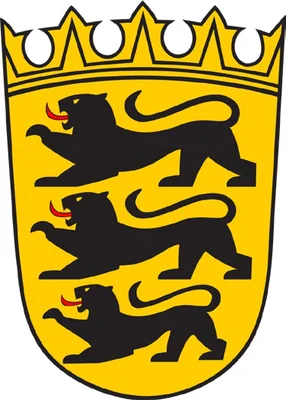 Baden-Württemberg | Stuttgart | Landtag of Baden-Württemberg | Minister-President |
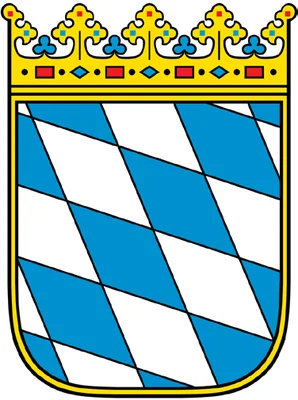 Bavaria | Munich | Bavarian Landtag | Minister-President |
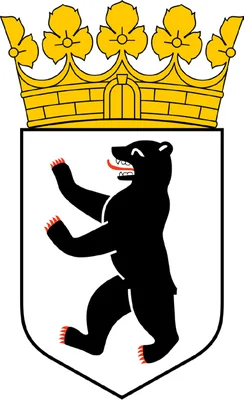 Berlin | Berlin | Berlin House of Representatives (Abgeordnetenhaus) | Governing Mayor (Regierender Bürgermeister) |
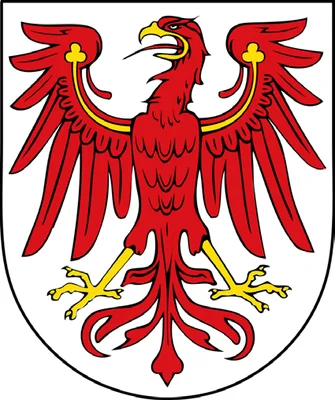 Brandenburg | Potsdam | Landtag of Brandenburg | Minister-President |
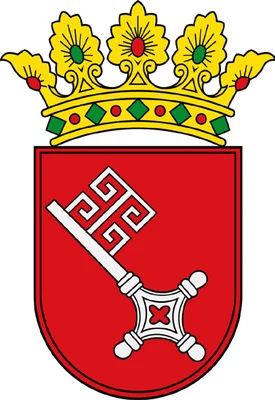 Bremen | Bremen | Bremen Parliament (Bürgerschaft) | President of the Senate and Mayor |
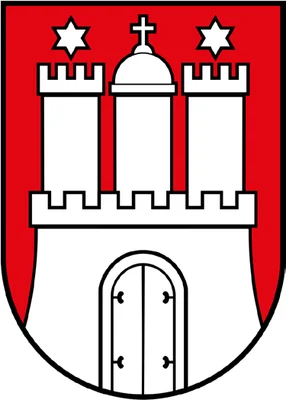 Hamburg | Hamburg | Hamburg Parliament (Bürgerschaft) | First Mayor (Erster Bürgermeister) |
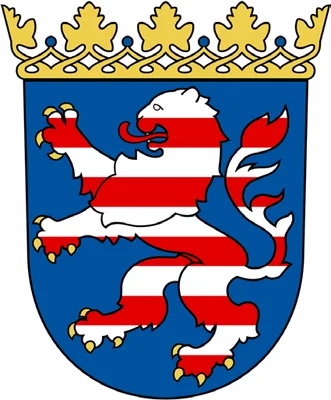 Hesse | Wiesbaden | Hessian Landtag | Minister-President |
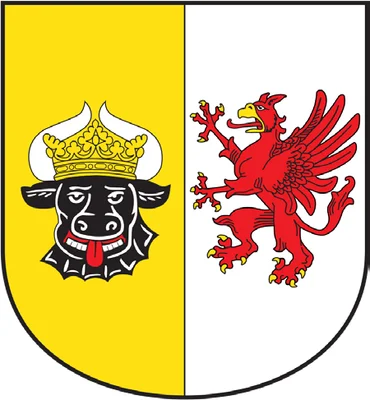 Mecklenburg-Western Pomerania | Schwerin | Landtag of Mecklenburg-Western Pomerania | Minister-President |
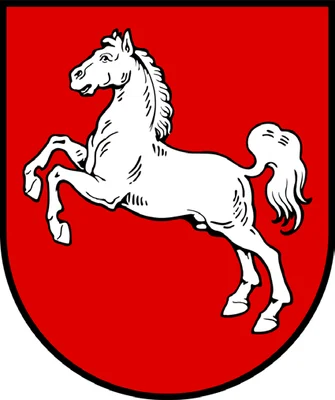 Lower Saxony | Hanover | Lower Saxony Landtag | Minister-President |
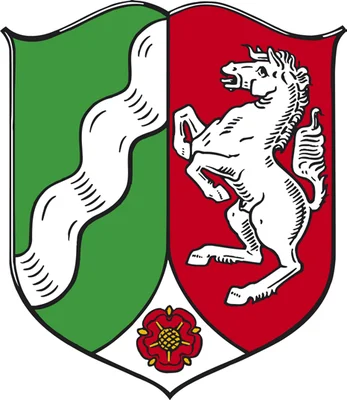 North Rhine-Westphalia | Düsseldorf | Landtag of North Rhine-Westphalia | Minister-President |
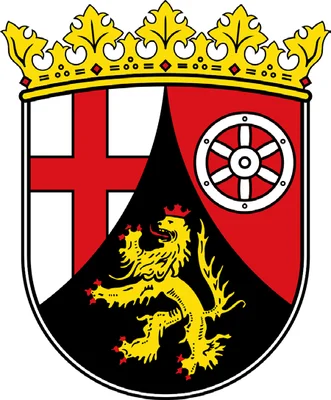 Rhineland-Palatinate | Mainz | Landtag of Rhineland-Palatinate | Minister-President |
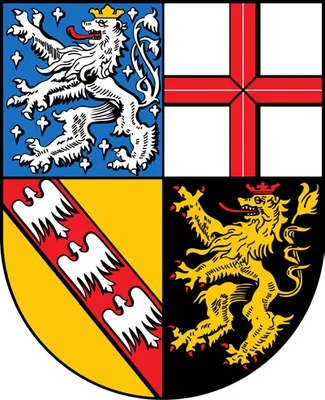 Saarland | Saarbrücken | Landtag of Saarland | Minister-President |
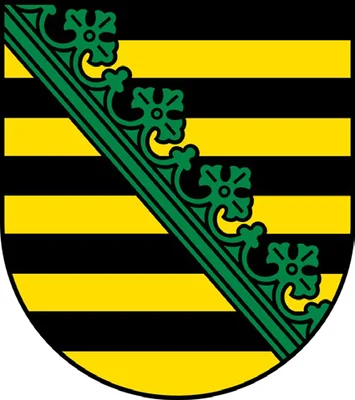 Saxony | Dresden | Saxon Landtag | Minister-President |
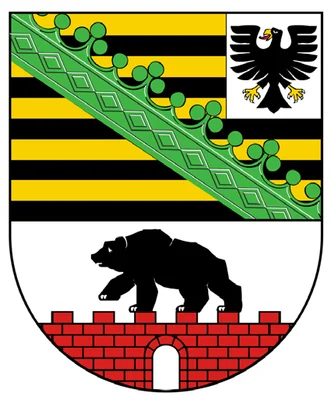 Saxony-Anhalt | Magdeburg | Landtag of Saxony-Anhalt | Minister-President |
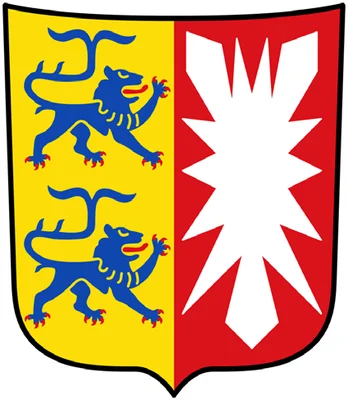 Schleswig-Holstein | Kiel | Landtag of Schleswig-Holstein | Minister-President |
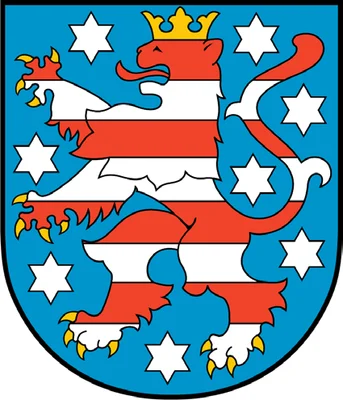 Thuringia | Erfurt | Thuringian Landtag | Minister-President |
Click on a state to see its 10 state questions with the correct answers.
Federalism: why Germany is built from states
Germany is a federation (Bundesstaat): power is shared between the federal level (Bund), the 16 states and the municipalities. Every state has its own constitution, parliament and government (question 39). The states are in charge of schools, most of the police and cultural affairs, while foreign policy and defence belong to the federal level – which is why no state has a foreign minister. Through the Bundesrat (federal council), the state governments take part in federal lawmaking. The division into states is so fundamental that the Basic Law protects it even against constitutional amendments (Article 79(3)). For how the Bundestag, the Bundesrat and the federal government work together, see Germany's political system explained.
The three city states: Berlin, Hamburg and Bremen
In a city state, a city is also a federal state in its own right. Instead of a Landtag and a state government, it has a city parliament and a Senate (Senat), and its ministers are called senators (Senatorinnen and Senatoren).
- Berlin is both the federal capital and a state. Its parliament is the Abgeordnetenhaus (House of Representatives), and the Senate is led by the Governing Mayor (Regierende Bürgermeisterin or Regierender Bürgermeister). The city is divided into twelve districts (Bezirke).
- Hamburg is officially the Free and Hanseatic City of Hamburg. Its parliament is the Bürgerschaft and its head of government is the First Mayor (Erste Bürgermeisterin or Erster Bürgermeister).
- Bremen is officially the Free Hanseatic City of Bremen and consists of two cities: Bremen and Bremerhaven, about 60 kilometres apart and both surrounded by Lower Saxony. Its head of government is the President of the Senate.
In these three states, the test does not ask for the capital. Instead, it asks what a city state is (Bremen, question 7). In Bremen's question the wrong options are Munich, Frankfurt and Erfurt – big cities, but not states of their own. In Berlin and Hamburg the wrong options are territorial states such as Hesse, Bavaria or Saxony. You will find all the questions on the state pages for Berlin and Bremen.
The Free States: Bavaria, Saxony and Thuringia
Freistaat is an old German word for a republic – a state without a king. When the monarchy ended in 1918, many German states took the name; today only Bavaria (Bayern), Saxony (Sachsen) and Thuringia (Thüringen) still use it. It brings no special powers: a Free State is a federal state like any other. In Bavaria and Saxony the government is called the State Government (Staatsregierung), but it is still led by a Minister-President, as in every state except the city states. You will meet the word in test questions such as “Which coat of arms belongs to the Free State of Bayern?” from the Bavaria state questions.
The five “new” states since 1990
The “new federal states” are the five states on the territory of the former GDR (East Germany): Brandenburg, Mecklenburg-Western Pomerania, Saxony, Saxony-Anhalt and Thuringia (question 201). The GDR had abolished its states in 1952 and replaced them with districts (Bezirke). In 1990 the states were re-established and joined the Federal Republic on 3 October 1990. Germany has had 16 states ever since.
Watch out for Berlin: East Berlin was the capital of the GDR, but reunified Berlin does not count as one of the five new states. So when the test asks how many states joined in 1990, the answer is 5. For more on this period, see the citizenship test questions on the GDR, the Wall and reunification.
Classic traps: the capital is not always the biggest city
In Hesse, North Rhine-Westphalia, Mecklenburg-Western Pomerania and Saxony, the state capital is not the largest city. The test uses exactly these well-known cities as wrong answers (Hesse, question 7). The main traps from the state questions (German names as they appear in the test):
| State | Correct capital | Tempting wrong answer |
|---|---|---|
| Hesse (Hessen) | Wiesbaden | Frankfurt am Main |
| North Rhine-Westphalia | Düsseldorf | Köln (Cologne), Bonn |
| Mecklenburg-Western Pomerania | Schwerin | Rostock |
| Saxony (Sachsen) | Dresden | Leipzig |
| Saxony-Anhalt | Magdeburg | Halle |
| Rhineland-Palatinate | Mainz | Koblenz, Ludwigshafen |
| Lower Saxony (Niedersachsen) | Hannover (Hanover) | Braunschweig |
| Schleswig-Holstein | Kiel | Lübeck |
| Brandenburg | Potsdam | the city of Brandenburg |
Brandenburg is the sneakiest: the town of Brandenburg an der Havel is one of the options, but the capital is Potsdam. And Frankfurt (Oder) in Brandenburg is not Frankfurt am Main in Hesse. Bonn is another trap: it was West Germany's capital until 1990, but the capital of North Rhine-Westphalia is Düsseldorf. You can see every answer option on the Hesse state questions page.
Memory aids for the 16 capitals
For the test you don't need all 16 capitals: the state questions only come from the state you live in. If you want to learn them anyway – for everyday life or travel – these tricks help:
- City states are their own capitals: Berlin, Hamburg, Bremen.
- Learn them by region: north – Kiel, Schwerin, Hanover, Hamburg, Bremen. East – Berlin, Potsdam, Magdeburg, Dresden, Erfurt. West – Düsseldorf, Mainz, Wiesbaden, Saarbrücken. South – Stuttgart, Munich.
- Mainz and Wiesbaden face each other across the Rhine: Mainz on the left bank (Rhineland-Palatinate), Wiesbaden on the right (Hesse).
- Potsdam sits right on Berlin's border – just as the state of Brandenburg surrounds Berlin completely.
- The name helps: Saarbrücken, the capital of Saarland, carries the river Saar in its name.
- Don't pick the famous city: Frankfurt, Cologne, Leipzig and Rostock are major cities, but none of them is a state capital.
The 10 state questions: what comes up in your test
The citizenship test has 33 questions: 30 general ones and 3 about your federal state, drawn from a pool of 10 per state. What counts is where your main residence is – not where you sit the test. In all 16 states, the 10 questions follow the same pattern:
- Recognise the state coat of arms (picture question)
- A district (Landkreis or Bezirk) of the state (in Bremen: a neighbourhood, Stadtteil)
- How many years the state parliament is elected for
- The minimum voting age in local elections (in Bremen: in the state election)
- The colours of the state flag
- Where to get information on politics: the State Agency for Civic Education (Landeszentrale für politische Bildung; in Schleswig-Holstein, the State Commissioner)
- The state capital (in the city states: what is a city state?)
- Find the state on a map (picture question)
- What the head of government is called
- Which ministry the state does not have – always foreign affairs (in the city states it is asked as a senator for external relations)
Two numbers are worth knowing by heart. State parliaments are elected for 5 years, except in Bremen, where it is 4 years (Bremen, question 3); the Bundestag, by contrast, is elected for 4 years. In local elections you can vote from 16 in most states, but only from 18 in Bavaria, Hesse, Rhineland-Palatinate, Saarland and Saxony. The coat-of-arms and map questions are collected in all picture questions with answers. In the app, choose your state and you will automatically practise the right 10 questions. The official catalogue for each state is also available in the BAMF Online-Testcenter (in German).
Frequently asked questions
How many federal states does Germany have?
Germany has 16 federal states (question 24). The five eastern states joined on 3 October 1990. Alsace-Lorraine (Elsass-Lothringen), a popular wrong answer in the test, is not a German state – it is a region of France.
Is the capital of Hesse Frankfurt or Wiesbaden?
Wiesbaden. Frankfurt am Main is Hesse's largest city and a major financial centre, but it is not the state capital.
Are the German states called “Bundesstaaten”?
No. In German, a Bundesstaat is the whole federation – Germany itself. The individual states are called Länder or Bundesländer. That is why the correct test answer is: Germany is a democratic and social Bundesstaat (federation).
Which is the largest German state?
Bavaria is the largest by area and North Rhine-Westphalia the largest by population. The smallest state is Bremen; the smallest non-city state is Saarland.
Do I need to know every state capital for the citizenship test?
No. You only get questions about your own state – 3 of its 10 state questions. The general part does ask about the number of states, the new states and what the states are responsible for; you will find those on the questions on the state and its institutions page.
Sources
- Grundgesetz Art. 20 (gesetze-im-internet.de)
- Grundgesetz Art. 30 (gesetze-im-internet.de)
- Einbürgerungstestverordnung § 1 (gesetze-im-internet.de)
- BAMF: Online-Testcenter mit allen Landesfragen
We rely on official sources. The current law and the advice of your naturalisation authority always take precedence.
Keep reading
- Knowledge for the testGermany's political system explained simplyBundestag, Bundesrat, federal government, president and constitutional court: who decides what in Germany, explained simply for the citizenship test.
- The citizenship testGerman citizenship test: all picture questions with answersCoats of arms, flags, maps and photos: every question in the German citizenship test that uses images, with the correct answer shown.
- Knowledge for the testFlag, coat of arms, anthem: Germany's national symbolsBlack-red-gold, the federal eagle and the national anthem: where Germany's state symbols come from and what you need to know about them for the test.
This guide is not legal advice. Laws and administrative practice can change; your naturalisation authority's information is binding.