Test questions by topic
Citizenship test questions on the GDR, the Wall and reunification
7 min readDiesen Ratgeber auf Deutsch lesen
With 42 questions, divided Germany is one of the biggest topics in the test – and one of the most predictable, because almost everything hangs on a handful of dates. The questions follow the story: four occupation zones and four sectors in Berlin after 1945, the Berlin Airlift of 1948/49, the founding of the Federal Republic and the GDR in 1949, the uprising of 17 June 1953, the building of the Wall in 1961, the Monday demonstrations and the opening of the Wall in 1989, and reunification on 3 October 1990. There are also questions on life in the GDR: the planned economy, the Stasi, the Warsaw Pact, the flag and the coat of arms. Study tip: six questions simply ask which of today's federal states belonged to the GDR. Learn the five – Mecklenburg-Vorpommern, Brandenburg, Sachsen-Anhalt, Sachsen and Thüringen – and those points are safe.
What you should know
- After 1945 the four Allies – the USA, the Soviet Union, Great Britain and France – divided Germany into four occupation zones and Berlin into four sectors; Japan was not an occupying power.
- On the map (question 176) the British zone is in the north-west, the Soviet zone in the east, the American zone in the south and the French zone in the south-west.
- Because the Soviet Union cut off all land routes to West Berlin, the city was supplied by an airlift from June 1948 to May 1949.
- In 1949 two German states were founded: the Federal Republic of Germany and, in the Soviet zone, the GDR (Deutsche Demokratische Republik), whose black-red-gold flag bore a hammer, compass and wreath of grain and which existed until 1990.
- The GDR was a dictatorship with a planned economy, belonged to the Warsaw Pact in the Cold War and kept watch on its people through the Stasi, the Ministry for State Security.
- On 17 June 1953 there were nationwide strikes and a popular uprising in the GDR – for a long time the day was a public holiday in West Germany.
- The GDR built the Wall in Berlin in 1961; the city remained divided by it until 1989.
- At the Monday demonstrations of 1989 people chanted “Wir sind das Volk” (“We are the people”); during this “Wende” (turning point) the GDR changed from a dictatorship to a democracy and the Wall was opened.
- On 3 October 1990 the five eastern states joined the Federal Republic – under Helmut Kohl, the “Chancellor of German Unity”; Germany has had its present borders ever since, and the day is the national holiday, the Day of German Unity.
- The former GDR comprised Mecklenburg-Vorpommern, Brandenburg, Sachsen-Anhalt (Saxony-Anhalt), Sachsen (Saxony) and Thüringen (Thuringia) plus East Berlin – six questions ask about this alone (question 201).
The questions with the correct answer (42 questions)
Practise this topicQuestion 151
Who built the Wall in Berlin?
Wer baute die Mauer in Berlin?
- Great Britain
- the GDR – Correct answer
- the Federal Republic of Germany
- the USA
In the test (German): die DDR
View this questionQuestion 166
At which demonstrations in Germany did people chant "Wir sind das Volk" ("We are the people")?
Bei welchen Demonstrationen in Deutschland riefen die Menschen "Wir sind das Volk"?
- at the workers' uprising in 1953 in the GDR
- at the demonstrations in 1968 in the Federal Republic of Germany
- at the anti-nuclear power demonstrations in 1985 in the Federal Republic of Germany
- at the Monday demonstrations in 1989 in the GDR – Correct answer
In the test (German): bei den Montagsdemonstrationen 1989 in der DDR
View this questionQuestion 167
Which countries were referred to in Germany as the "Allied occupying powers" after the Second World War?
Welche Länder wurden nach dem Zweiten Weltkrieg in Deutschland als "Alliierte Besatzungsmächte" bezeichnet?
- Soviet Union, Great Britain, Poland, Sweden
- France, Soviet Union, Italy, Japan
- USA, Soviet Union, Spain, Portugal
- USA, Soviet Union, Great Britain, France – Correct answer
In the test (German): USA, Sowjetunion, Großbritannien, Frankreich
View this questionQuestion 168
Which country was not an "Allied occupying power" in Germany?
Welches Land war keine "Alliierte Besatzungsmacht" in Deutschland?
- USA
- Soviet Union
- France
- Japan – Correct answer
In the test (German): Japan
View this questionQuestion 169
When was the Federal Republic of Germany founded?
Wann wurde die Bundesrepublik Deutschland gegründet?
- 1939
- 1945
- 1949 – Correct answer
- 1951
In the test (German): 1949
View this questionQuestion 172
In which occupation zone was the GDR founded? In the …
In welcher Besatzungszone wurde die DDR gegründet? In der …
- American occupation zone
- French occupation zone
- British occupation zone
- Soviet occupation zone – Correct answer
In the test (German): sowjetischen Besatzungszone
View this questionQuestion 174
When was the GDR founded?
Wann wurde die DDR gegründet?
- 1947
- 1949 – Correct answer
- 1953
- 1956
In the test (German): 1949
View this questionQuestion 175
How many occupation zones were there in Germany after the Second World War?
Wie viele Besatzungszonen gab es in Deutschland nach dem Zweiten Weltkrieg?
- 3
- 4 – Correct answer
- 5
- 6
In the test (German): 4
View this questionQuestion 176
How were Germany's occupation zones distributed after 1945?
Wie waren die Besatzungszonen Deutschlands nach 1945 verteilt?
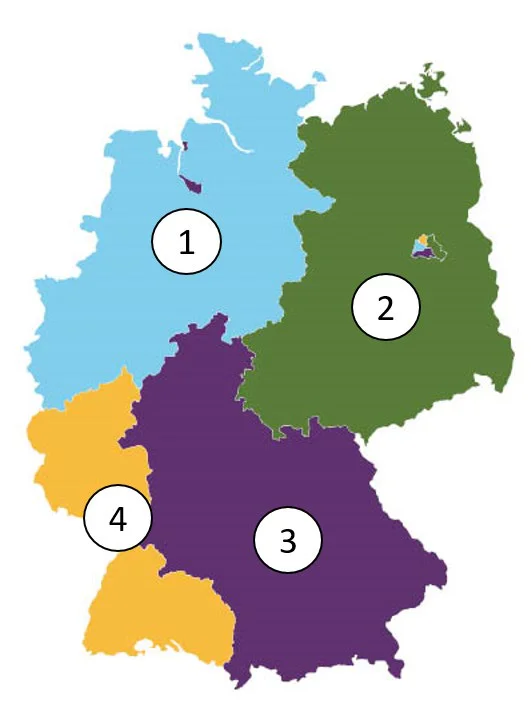
- 1=Great Britain, 2=Soviet Union, 3=France, 4=USA
- 1=Soviet Union, 2=Great Britain, 3=USA, 4=France
- 1=Great Britain, 2=Soviet Union, 3=USA, 4=France – Correct answer
- 1=Great Britain, 2=USA, 3=Soviet Union, 4=France
In the test (German): 1=Großbritannien, 2=Sowjetunion, 3=USA, 4=Frankreich
View this questionQuestion 177
Which German city was divided into four sectors after the Second World War?
Welche deutsche Stadt wurde nach dem Zweiten Weltkrieg in vier Sektoren aufgeteilt?
- München
- Berlin – Correct answer
- Dresden
- Frankfurt/Oder
In the test (German): Berlin
View this questionQuestion 178
From June 1948 to May 1949, the citizens of West Berlin were supplied by an airlift. What circumstance was responsible for this?
Vom Juni 1948 bis zum Mai 1949 wurden die Bürgerinnen und Bürger von West-Berlin durch eine Luftbrücke versorgt. Welcher Umstand war dafür verantwortlich?
- For France, supplying the population of West Berlin by aeroplane was cheaper.
- The American soldiers were afraid of raids during transport by land.
- For Great Britain, supplying via the airlift was faster.
- The Soviet Union cut off all traffic by land. – Correct answer
In the test (German): Die Sowjetunion unterbrach den gesamten Verkehr auf dem Landwege.
View this questionQuestion 185
What did the expression "Iron Curtain" stand for? For the sealing off …
Wofür stand der Ausdruck "Eiserner Vorhang"? Für die Abschottung …
- of the Warsaw Pact from the West – Correct answer
- of northern Germany from southern Germany
- of Nazi Germany from the Allies
- of Europe from the USA
In the test (German): des Warschauer Pakts gegen den Westen
View this questionQuestion 186
In 1953 there was an uprising in the GDR which, for a long time, was commemorated by a public holiday in the Federal Republic of Germany. When was that?
Im Jahr 1953 gab es in der DDR einen Aufstand, an den lange Zeit in der Bundesrepublik Deutschland ein Feiertag erinnerte. Wann war das?
- 1 May
- 17 June – Correct answer
- 20 July
- 9 November
In the test (German): 17. Juni
View this questionQuestion 187
Which German state had a black-red-gold flag with a hammer, compass and wreath of grain?
Welcher deutsche Staat hatte eine schwarz-rot-goldene Flagge mit Hammer, Zirkel und Ährenkranz?
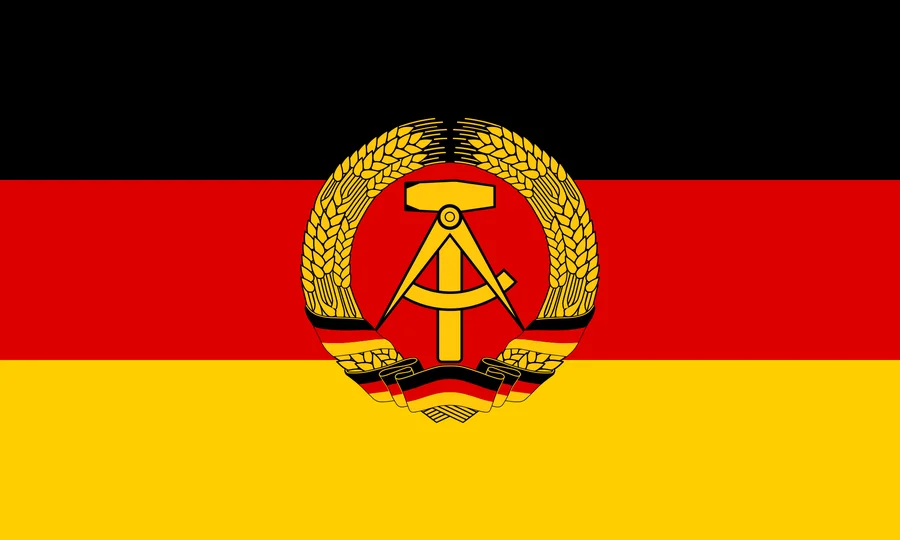
- Preußen
- Federal Republic of Germany
- "Third Reich"
- GDR – Correct answer
In the test (German): DDR
View this questionQuestion 188
In which year was the Wall in Berlin built?
In welchem Jahr wurde die Mauer in Berlin gebaut?
- 1953
- 1956
- 1959
- 1961 – Correct answer
In the test (German): 1961
View this questionQuestion 189
When did the GDR build the Wall in Berlin?
Wann baute die DDR die Mauer in Berlin?
- 1919
- 1933
- 1961 – Correct answer
- 1990
In the test (German): 1961
View this questionQuestion 190
What does the abbreviation DDR stand for?
Was bedeutet die Abkürzung DDR?
- Dritter Deutscher Rundfunk (Third German Broadcasting)
- Die Deutsche Republik (The German Republic)
- Dritte Deutsche Republik (Third German Republic)
- Deutsche Demokratische Republik (German Democratic Republic) – Correct answer
In the test (German): Deutsche Demokratische Republik
View this questionQuestion 191
When was the Wall in Berlin opened to everyone?
Wann wurde die Mauer in Berlin für alle geöffnet?
- 1987
- 1989 – Correct answer
- 1992
- 1995
In the test (German): 1989
View this questionQuestion 192
Which present-day German federal state used to be part of the territory of the GDR?
Welches heutige deutsche Bundesland gehörte früher zum Gebiet der DDR?
- Brandenburg – Correct answer
- Bayern
- Saarland
- Hessen
In the test (German): Brandenburg
View this questionQuestion 193
From 1961 to 1989, Berlin was …
Von 1961 bis 1989 war Berlin …
- without a mayor.
- a state of its own.
- divided by a wall. – Correct answer
- only reachable by aeroplane.
In the test (German): durch eine Mauer geteilt.
View this questionQuestion 194
On 3 October, people in Germany celebrate the Day of German …
Am 3. Oktober feiert man in Deutschland den Tag der Deutschen …
- Unity. – Correct answer
- Nation.
- Federal States.
- Cities.
In the test (German): Einheit.
View this questionQuestion 195
Which present-day German federal state used to be part of the territory of the GDR?
Welches heutige deutsche Bundesland gehörte früher zum Gebiet der DDR?
- Hessen
- Sachsen-Anhalt – Correct answer
- Nordrhein-Westfalen
- Saarland
In the test (German): Sachsen-Anhalt
View this questionQuestion 196
Why is the period in autumn 1989 in the GDR called "Die Wende" ("the turning point")? During this time the GDR changed politically …
Warum nennt man die Zeit im Herbst 1989 in der DDR "Die Wende"? In dieser Zeit veränderte sich die DDR politisch …
- from a dictatorship to a democracy. – Correct answer
- from a liberal market economy to socialism.
- from a monarchy to social democracy.
- from a religious state to a communist state.
In the test (German): von einer Diktatur zur Demokratie.
View this questionQuestion 197
Which present-day German federal state used to be part of the territory of the GDR?
Welches heutige deutsche Bundesland gehörte früher zum Gebiet der DDR?
- Thüringen – Correct answer
- Hessen
- Bayern
- Bremen
In the test (German): Thüringen
View this questionQuestion 198
Which present-day German federal state used to be part of the territory of the GDR?
Welches heutige deutsche Bundesland gehörte früher zum Gebiet der DDR?
- Bayern
- Niedersachsen
- Sachsen – Correct answer
- Baden-Württemberg
In the test (German): Sachsen
View this questionQuestion 199
In the GDR, the abbreviation "Stasi" referred to …
Mit der Abkürzung "Stasi" meinte man in der DDR …
- the parliament.
- the Ministry for State Security. – Correct answer
- a ruling party.
- the Ministry of People's Education.
In the test (German): das Ministerium für Staatssicherheit.
View this questionQuestion 200
Which present-day German federal state used to be part of the territory of the GDR?
Welches heutige deutsche Bundesland gehörte früher zum Gebiet der DDR?
- Hessen
- Schleswig-Holstein
- Mecklenburg-Vorpommern – Correct answer
- Saarland
In the test (German): Mecklenburg-Vorpommern
View this questionQuestion 201
Which of the following lists contains only federal states that belonged to the territory of the former GDR?
Welche der folgenden Auflistungen enthält nur Bundesländer, die zum Gebiet der früheren DDR gehörten?
- Niedersachsen, Nordrhein-Westfalen, Hessen, Schleswig-Holstein, Brandenburg
- Mecklenburg-Vorpommern, Brandenburg, Sachsen, Sachsen-Anhalt, Thüringen – Correct answer
- Bayern, Baden-Württemberg, Rheinland-Pfalz, Thüringen, Sachsen
- Sachsen, Thüringen, Hessen, Niedersachsen, Brandenburg
In the test (German): Mecklenburg-Vorpommern, Brandenburg, Sachsen, Sachsen-Anhalt, Thüringen
View this questionQuestion 202
Which side did the GDR belong to in the “Cold War”?
Zu wem gehörte die DDR im "Kalten Krieg"?
- to the Western powers
- to the Warsaw Pact – Correct answer
- to NATO
- to the non-aligned states
In the test (German): zum Warschauer Pakt
View this questionQuestion 203
What was the GDR's economic system called?
Wie hieß das Wirtschaftssystem der DDR?
- Market economy
- Planned economy – Correct answer
- Supply and demand
- Capitalism
In the test (German): Planwirtschaft
View this questionQuestion 204
How did the Federal Republic of Germany and the GDR become one state?
Wie wurden die Bundesrepublik Deutschland und die DDR zu einem Staat?
- The Federal Republic occupied the GDR.
- Today's five eastern federal states joined the Federal Republic of Germany. – Correct answer
- The western federal states joined the GDR.
- The GDR occupied the Federal Republic of Germany.
In the test (German): Die heutigen fünf östlichen Bundesländer sind der Bundesrepublik Deutschland beigetreten.
View this questionQuestion 205
With the accession of the GDR to the Federal Republic of Germany, the new federal states now also belong …
Mit dem Beitritt der DDR zur Bundesrepublik Deutschland gehören die neuen Bundesländer nun auch …
- to the European Union. – Correct answer
- to the Warsaw Pact.
- to OPEC.
- to the European Defence Community.
In the test (German): zur Europäischen Union.
View this questionQuestion 207
Which military alliance was the GDR a member of?
In welchem Militärbündnis war die DDR Mitglied?
- NATO
- the Confederation of the Rhine
- the Warsaw Pact – Correct answer
- the European Alliance
In the test (German): im Warschauer Pakt
View this questionQuestion 208
What was the “Stasi”?
Was war die "Stasi"?
- the secret service in the “Third Reich”
- a famous German memorial site
- the secret service of the GDR – Correct answer
- a German sports club during the Second World War
In the test (German): der Geheimdienst der DDR
View this questionQuestion 209
Which was the coat of arms of the German Democratic Republic?
Welches war das Wappen der Deutschen Demokratischen Republik?
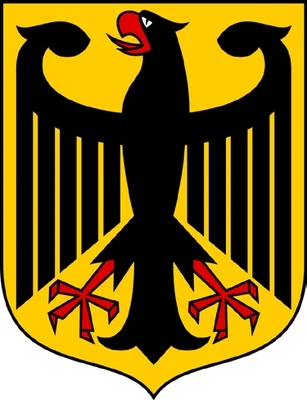 Image 1
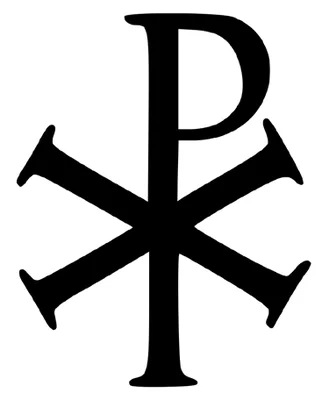 Image 2
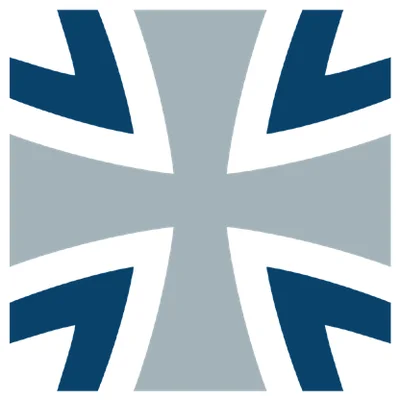 Image 3
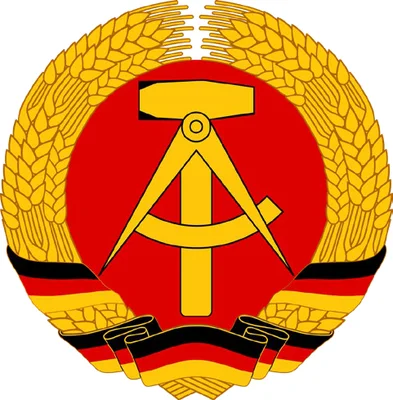 Image 4 – Correct answer
Question 210
What happened in the GDR on 17 June 1953?
Was ereignete sich am 17. Juni 1953 in der DDR?
- the ceremonial accession to the Warsaw Pact
- nationwide strikes and a popular uprising – Correct answer
- the 1st SED party congress
- Fidel Castro's first visit
In the test (German): landesweite Streiks und ein Volksaufstand
View this questionQuestion 215
Who is referred to as the “Chancellor of German Unity”?
Wer wird als "Kanzler der Deutschen Einheit" bezeichnet?
- Gerhard Schröder
- Helmut Kohl – Correct answer
- Konrad Adenauer
- Helmut Schmidt
In the test (German): Helmut Kohl
View this questionQuestion 217
During which period did the German Democratic Republic (GDR) exist?
In welchem Zeitraum gab es die Deutsche Demokratische Republik (DDR)?
- 1919 to 1927
- 1933 to 1945
- 1945 to 1961
- 1949 to 1990 – Correct answer
In the test (German): 1949 bis 1990
View this questionQuestion 218
How many federal states joined the Federal Republic of Germany at reunification in 1990?
Wie viele Bundesländer kamen bei der Wiedervereinigung 1990 zur Bundesrepublik Deutschland hinzu?
- 4
- 5 – Correct answer
- 6
- 7
In the test (German): 5
View this questionQuestion 219
The Federal Republic of Germany has had its present-day borders since …
Die Bundesrepublik Deutschland hat die Grenzen von heute seit …
- 1933
- 1949
- 1971
- 1990 – Correct answer
In the test (German): 1990
View this questionQuestion 228
What is the accession of the GDR to the Federal Republic of Germany in 1990 generally called?
Wie wird der Beitritt der DDR zur Bundesrepublik Deutschland im Jahr 1990 allgemein genannt?
- NATO eastward enlargement
- EU eastward enlargement
- German reunification – Correct answer
- European Community
In the test (German): Deutsche Wiedervereinigung
View this questionQuestion 298
The migrants living in the GDR came mainly from …
In der DDR lebten vor allem Migrantinnen und Migranten aus …
- Vietnam, Poland, Mozambique. – Correct answer
- France, Romania, Somalia.
- Chile, Hungary, Zimbabwe.
- North Korea, Mexico, Egypt.
In the test (German): Vietnam, Polen, Mosambik.
View this question
More topics
Frequently asked questions
How many questions on the GDR and reunification are in the citizenship test?
42 of the 300 general questions belong to this topic. There's no fixed number per test, but on average it works out at about 4 of your 30 general questions – so it pays to study this topic well.
Which German states were part of the GDR?
The five “new states”: Mecklenburg-Vorpommern, Brandenburg, Sachsen-Anhalt (Saxony-Anhalt), Sachsen (Saxony) and Thüringen (Thuringia), plus East Berlin, the GDR's capital. Since reunification the whole of Berlin has been a federal state in its own right.
Why is 3 October Germany's national holiday?
On 3 October 1990 reunification took effect: the GDR joined the Federal Republic. The Day of German Unity is the only public holiday set at federal level – all the others are set by the federal states.
Keep reading
- Knowledge for the testGerman history timeline for the citizenship testFrom 1933 through division and the fall of the Wall to today: the dates in German history that come up in the citizenship test, as a compact timeline.
- Knowledge for the testPublic holidays in Germany and what they meanGerman Unity Day, Easter, Christmas and more: which public holidays Germany has, what they commemorate and what the citizenship test asks about them.
- Test questions by topicCitizenship test questions on history, symbols and remembranceFlag, coat of arms, anthem, Jewish life, Adenauer, Brandt and the economic miracle: every citizenship test question on history and remembrance, with answers.
This guide is not legal advice. Laws and administrative practice can change; your naturalisation authority's information is binding.