Test questions by topic
Citizenship test questions on Europe and the EU
4 min readDiesen Ratgeber auf Deutsch lesen
The 20 Europe questions are a compact block you can learn quickly. Five of them simply ask which country borders Germany. The rest cover the basics of the European Union: the Treaties of Rome of 1957, the number of member states (27), the European Parliament (elected every five years, working in Strasbourg, Brussels and Luxembourg), euro cash since 2002, the Schengen Agreement and the EU flag. One picture question shows François Mitterrand and Helmut Kohl at Verdun – the answer is the EU's aim of peace and security. Study tip: memorise Germany's nine neighbours once, clockwise from the north – Denmark, Poland, Czechia, Austria, Switzerland, France, Luxembourg, Belgium, the Netherlands. The wrong options are almost always countries such as Norway, Sweden, Spain or Bulgaria that don't share a border with Germany.
What you should know
- The Federal Republic is a founding member of the EU: in 1957 it and five other countries created the European Economic Community (EEC) through the Treaties of Rome – more dates in our German history timeline.
- EU stands for European Union, which today has 27 member states.
- European integration means European states joining together to form the EU – whose central aim is peace and security.
- The European Parliament is elected every 5 years; in European elections you vote for its members – in Germany from the age of 16.
- The European Parliament works in Strasbourg, Brussels and Luxembourg; Strasbourg is its seat.
- People in Germany have paid in euro cash since 1 January 2002.
- The Schengen Agreement means you can generally travel to many European countries without passport checks – not to every country in the world.
- Germany has nine neighbours: Denmark, Poland, Czechia, Austria, Switzerland, France, Luxembourg, Belgium and the Netherlands (question 233).
- In the test, the country with a large German-speaking population is Austria, where German is the official language.
- The EU flag shows a circle of twelve gold stars on a blue background (question 226).
The questions with the correct answer (20 questions)
Practise this topicQuestion 173
The Federal Republic of Germany is a founding member of …
Die Bundesrepublik Deutschland ist ein Gründungsmitglied …
- the North Atlantic Treaty (NATO).
- the United Nations (UN).
- the European Union (EU). – Correct answer
- the Warsaw Pact.
In the test (German): der Europäischen Union (EU).
View this questionQuestion 221
Germany is a member of the Schengen Agreement. What does this mean?
Deutschland ist Mitglied des Schengener Abkommens. Was bedeutet das?
- Germans can travel to many countries in Europe without passport controls. – Correct answer
- Everyone can enter Germany without identity checks.
- Germans can travel to any country without passport controls.
- Germans can pay with the euro in any country.
In the test (German): Deutsche können in viele Länder Europas ohne Passkontrolle reisen.
View this questionQuestion 222
Which country is a neighbouring country of Germany?
Welches Land ist ein Nachbarland von Deutschland?
- Hungary
- Portugal
- Spain
- Switzerland – Correct answer
In the test (German): Schweiz
View this questionQuestion 223
Which country is a neighbouring country of Germany?
Welches Land ist ein Nachbarland von Deutschland?
- Romania
- Bulgaria
- Poland – Correct answer
- Greece
In the test (German): Polen
View this questionQuestion 224
What does the abbreviation EU stand for?
Was bedeutet die Abkürzung EU?
- European Enterprises
- European Union – Correct answer
- Unified Union
- Euro Union
In the test (German): Europäische Union
View this questionQuestion 225
In which other country is there a large German-speaking population?
In welchem anderen Land gibt es eine große deutschsprachige Bevölkerung?
- Czechia
- Norway
- Spain
- Austria – Correct answer
In the test (German): Österreich
View this questionQuestion 226
Which is the flag of the European Union?
Welche ist die Flagge der Europäischen Union?
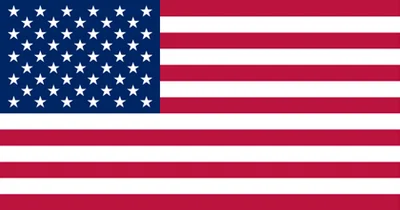 Image 1
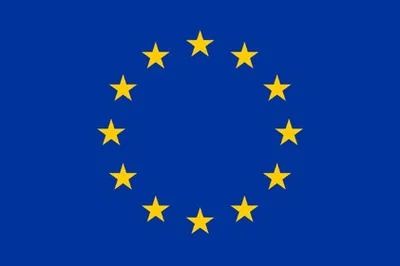 Image 2 – Correct answer
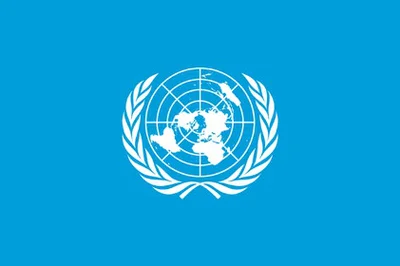 Image 3
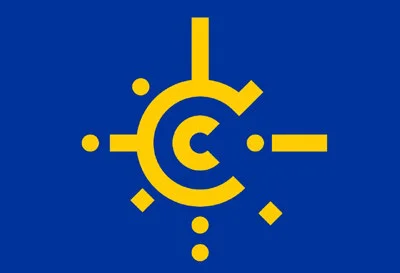 Image 4
Question 227
Which country is a neighbouring country of Germany?
Welches Land ist ein Nachbarland von Deutschland?
- Finland
- Denmark – Correct answer
- Norway
- Sweden
In the test (German): Dänemark
View this questionQuestion 229
Which country is a neighbouring country of Germany?
Welches Land ist ein Nachbarland von Deutschland?
- Spain
- Bulgaria
- Norway
- Luxembourg – Correct answer
In the test (German): Luxemburg
View this questionQuestion 230
The European Parliament is elected regularly, namely every …
Das Europäische Parlament wird regelmäßig gewählt, nämlich alle …
- 5 years. – Correct answer
- 6 years.
- 7 years.
- 8 years.
In the test (German): 5 Jahre.
View this questionQuestion 231
What does the term “European integration” mean?
Was bedeutet der Begriff "europäische Integration"?
- It refers to American immigrants in Europe.
- The term means the halt to immigration into Europe.
- It refers to European emigrants in the USA.
- The term means the joining together of European states to form the EU. – Correct answer
In the test (German): Der Begriff meint den Zusammenschluss europäischer Staaten zur EU.
View this questionQuestion 232
Who is elected in the European elections?
Wer wird bei der Europawahl gewählt?
- the European Commission
- the countries that are allowed to join the EU
- the members of the European Parliament – Correct answer
- the European constitution
In the test (German): die Abgeordneten des Europäischen Parlaments
View this questionQuestion 233
Which country is a neighbouring country of Germany?
Welches Land ist ein Nachbarland von Deutschland?
- Czechia – Correct answer
- Bulgaria
- Greece
- Portugal
In the test (German): Tschechien
View this questionQuestion 234
Where is one of the seats of the European Parliament?
Wo ist ein Sitz des Europäischen Parlaments?
- London
- Paris
- Berlin
- Strasbourg – Correct answer
In the test (German): Straßburg
View this questionQuestion 235
The then French President François Mitterrand and the then German Federal Chancellor Helmut Kohl together commemorate the dead of both World Wars in Verdun. Which goal of the European Union does this meeting make clear?
Der damalige französische Staatspräsident François Mitterrand und der damalige deutsche Bundeskanzler Helmut Kohl gedenken in Verdun gemeinsam der Toten beider Weltkriege. Welches Ziel der Europäischen Union wird bei diesem Treffen deutlich?
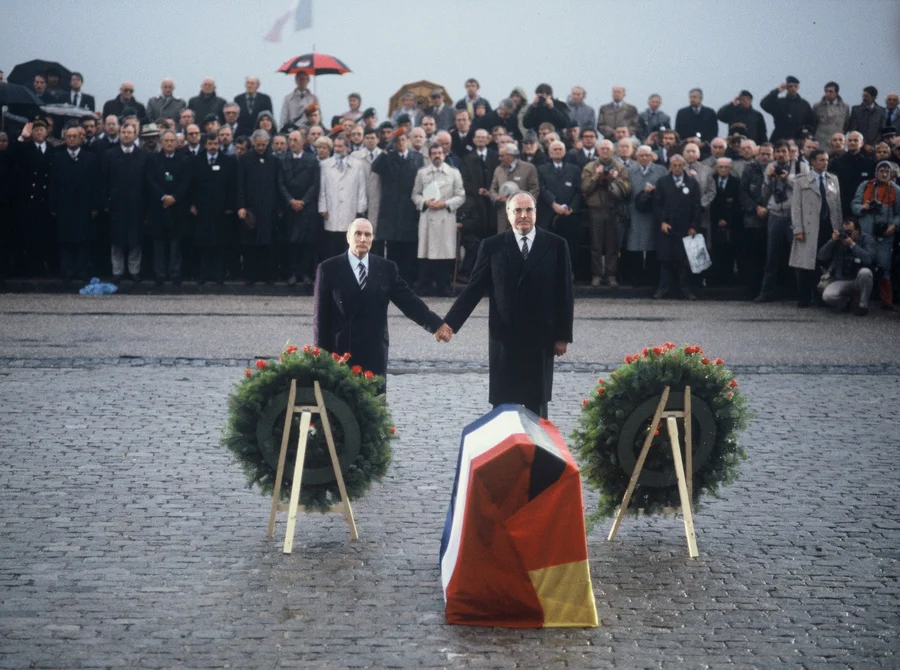
Image: © Bundesregierung/Richard Schulze-Vorberg - friendship between England and Germany
- freedom to travel to all EU countries
- peace and security in the EU countries – Correct answer
- uniform public holidays in the EU countries
In the test (German): Frieden und Sicherheit in den Ländern der EU
View this questionQuestion 236
How many member states does the EU have today?
Wie viele Mitgliedstaaten hat die EU heute?
- 21
- 23
- 25
- 27 – Correct answer
In the test (German): 27
View this questionQuestion 237
In 2007, the 50th anniversary of the “Treaties of Rome” was celebrated. What was the content of the treaties?
2007 wurde das 50-jährige Jubiläum der "Römischen Verträge" gefeiert. Was war der Inhalt der Verträge?
- Germany's accession to NATO
- Founding of the European Economic Community (EEC) – Correct answer
- Germany's obligation to pay reparations
- Establishment of the Oder-Neisse line as the eastern border
In the test (German): Gründung der Europäischen Wirtschaftsgemeinschaft (EWG)
View this questionQuestion 238
In which places does the European Parliament work?
An welchen Orten arbeitet das Europäische Parlament?
- Paris, London and The Hague
- Strasbourg, Luxembourg and Brussels – Correct answer
- Rome, Bern and Vienna
- Bonn, Zurich and Milan
In the test (German): Straßburg, Luxemburg und Brüssel
View this questionQuestion 239
Through which treaties did the Federal Republic of Germany join together with other states to form the European Economic Community?
Durch welche Verträge schloss sich die Bundesrepublik Deutschland mit anderen Staaten zur Europäischen Wirtschaftsgemeinschaft zusammen?
- through the “Treaties of Hamburg”
- through the “Treaties of Rome” – Correct answer
- through the “Treaties of Paris”
- through the “Treaties of London”
In the test (German): durch die "Römischen Verträge"
View this questionQuestion 240
Since when have people in Germany been paying in cash with the euro?
Seit wann bezahlt man in Deutschland mit dem Euro in bar?
- 1995
- 1998
- 2002 – Correct answer
- 2005
In the test (German): 2002
View this question
More topics
Frequently asked questions
How many Europe questions are in the German citizenship test?
The catalogue has 20 Europe questions out of 300 general ones. How many appear in your test isn't fixed – on average it works out at about 2 of your 30 general questions.
Which countries border Germany?
Nine: Denmark to the north, Poland and Czechia to the east, Austria and Switzerland to the south, and France, Luxembourg, Belgium and the Netherlands to the west. Norway, Sweden, Hungary and Spain do not border Germany.
How often is the European Parliament elected?
Every five years. Since 2024 you can vote in European elections in Germany from the age of 16; voters elect the members of the European Parliament, not the European Commission.
Keep reading
- Citizenship: requirements & applicationGerman citizenship for EU citizens: what's different and what isn'tEU citizens also need the citizenship test and B1 German to become German. What applies to you, and why naturalising can still be worth it despite free movement.
- Knowledge for the testGerman history timeline for the citizenship testFrom 1933 through division and the fall of the Wall to today: the dates in German history that come up in the citizenship test, as a compact timeline.
- Test questions by topicCitizenship test questions on National Socialism and World War II1933 to 1945: every citizenship test question on the Nazi dictatorship, the Holocaust, resistance and the end of the war, with the correct answer.
This guide is not legal advice. Laws and administrative practice can change; your naturalisation authority's information is binding.